

Spine, Joint & Pelvic Floor
Full Video
Physiotherapist: Squeezing Can Make Urinary Incontinence Worse
If you leak urine while running, jumping, or coughing, this video explains why simply squeezing harder often isn't the fix.
Explains the most common causes of shoulder pain (rotator cuff tendinopathy, subacromial impingement) and how to test whether neck nerve root involvement is contributing, with self-massage and stretching tips.
Is your shoulder currently hurting at the rest and during the movement and you need some help? Do you want easy stretching and treatment instructions for your issue? Or do you want to rule out is the neck bad guy in the background? It's great that you click it on this video as now we will going to go through the most common cause of the shoulder problems and easy solution for them.
Shoulder problems are common and they affect most of the people in entire population naturally. But this doesn't mean that they cannot be easily solved. The main cause of the shoulder problems is the rotator cuff, dentinopathy and what is that? Well, the rotator cuff consists several muscles and the tendons reference to tendon.
Patia means decreased function or reduced load tolerance. How does the inflammated shoulder typically feel? Well, if there is an inflammation present, then you may feel this dull throbbing pain around the shoulder, which is partly relieved by using anti-inflammatory medication. The challenge with the inflammation is that if the area's metabolism doesn't improve, the throbbing usually just intensifies.
For this reason, it's recommended to keep inflammated structures moving slightly, so that the oxygenated blood and nutrients can reach the tissue to help the situation. However, the most inflammation comes down within a short time, but if the situation persists, then you might be dealing with another pain mechanism. And in that point, it's advisable to consult a doctor about the shoulder pain. If you also have an injury or accident in the background, visit to the doctor is probably appropriate, as the medical records need to be updated.
It's for your safety. Do you suspect that your neck might be causing the symptoms around the shoulder area? If we think about the rough nerve testing, the C3 vertebrae of the neck controls the trapezius area, C4 controls the diaphragm, C5 controls deltoid, C6 controls biceps, C7 controls triceps, and C8 controls finger abductors. If there is a clear weakness in any of these areas on the symptomatic side, and if the positioning of the neck makes your shoulder symptoms worse, then the neck might be interfering with the shoulder issues.
If you want to apply the pressure to the nerve roots in the neck, here's how you can do it. First, do the maximum backward bend of your head. Then, tilt your head to the side without the pain. Think that your earlobe should travel straight towards the shoulder.
Then, when you have reached the end of the range of motion, then rotate your chin towards your armpit. After that, do the same test on the symptomatic side in the same order. If the range of motion is really limited, or if you experience intensive pain in the shoulder area, then the neck might be playing a role in your shoulder symptoms. If the symptoms are spreading further down to the arm, nerve testing is needed, and you're going to get suggestions to that down in the description.
Rotator cuff tendon issues, or sometimes referred to subacromial impingement, affect this area. At the outer edge of the shoulder, there is this bony roof, the acromion, and underneath comes the supraspinatus muscle. So, if we think about the anatomy of the shoulder in here, there is a clear mechanical roof. When the muscle becomes tense, and the body experiences repetitive load from the front or the side, the supraspinatus tightens, and the mechanical roof starts pressing against the muscle, affecting its circulation.
And there you have it. The result is the pain on the outer side of the shoulder, especially when lifting your arm or carrying heavy items. Limited range of motion. For example, pain intensifies when the arm is raised between 70 to 120 degrees.
Resting pain, the shoulder may hurt even at rest. I had a visit from this handsome 25-year-old man, who in this clip is lifting his arm from the front and the side. There is a clear range of motion limitation at the end of the motion, and the pain also occurs. Because he's a tough guy, you don't see the pain from his facial expression.
But he told me that. When I tested the structures with my fingers, there was noticeable tenderness in the outer edge of the shoulder, which I gently massaged. Other tests were quite calm, so I suspected that there was a muscle-related issue behind the pain. After the treatment, his movement looked like this.
And there was clicking sound in the shoulder, but no pain. And his range of motion was really good. If you want to get easy tips for your musculoskeletal issues, then subscribe to the channel would be appreciated. Thank you very much for that.
This treatment should be definitely to be tried in the outer structures of the shoulder. So, find a bony roof, its back angle at the 90-degree angle, and the front edge where the collarbone starts moving and attaches to a breastbone aka sternum. You should be able to easily reach underneath this roof with the ball and gently massage the area for a short while, keeping your face neutral. If you treat it too forcefully, or if you feel pain after the treatment, it's time to check yourself from the mirror.
Too much pressure applied. Interestingly, this issue is typically linked to heavy work that involves a lot of repetitions. But it can also occur to people who don't have a physical background. In those cases, small repetitive movements and poor economics might be the trigger of the symptoms.
Shoulder blade control is important. And at the end of the video, you're going to get tips how to train shoulder blade control. How can we get the easiest stretch for the outer sides of the shoulder? Try this.
Place the back of the hand under your butt, noticing that the upper arm is angled downwards. Then, when you place the back of the elbow against the cabinet or doorframe, gently rotate the upper body towards the cabinet or the frame, and you're going to feel a light stretch at the outer side of the upper arm. If you don't feel the stretch, try different heights with the hand placement. If you're looking for the tips stretching the muscles and the tendons of the shoulder, here's a recommendation for that.
Thank you.
Explains the most common causes of shoulder pain (rotator cuff tendinopathy, subacromial impingement) and how to test whether neck nerve root involvement is contributing, with self-massage and stretching tips.
The video demonstrates specific movement patterns and clinical exercise progressions: Is your shoulder currently hurting at the rest and during the movement and you need some help? Do you want easy stretching and treatment instructions for your issue? Or do you want to rule out is the neck bad guy in the...
If symptoms relating to "Shoulder Pain? It Could Be Your Neck! (Simple Test & Treatment)" persist for more than 1–2 weeks, interfere with sleep or daily function, an in-person OMT evaluation is recommended to identify the root cause and ensure proper rehabilitation.
If you leak urine while running, jumping, or coughing, this video explains why simply squeezing harder often isn't the fix.

Explains how chronic low-grade inflammation slows healing and increases pain sensitivity, and gives three practical dietary changes (fatty fish, colorful vegetables, olive oil) to help calm it.
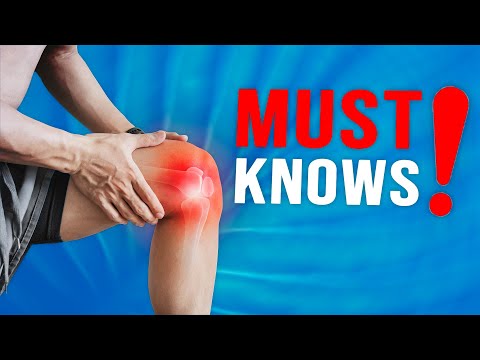
Breaks down five key facts about knee osteoarthritis, emphasizing that pain doesn't equal joint damage and that movement, not rest, is the best way to manage and improve the condition.
Get instant access to Janne Sakkinen's official Google Drive folder with exercise guides and rehabilitation protocols.
Get Free PDF Guides (Google Drive)Medical Disclaimer: The information presented in this article is strictly for educational purposes and does not replace a clinical physical therapy evaluation, medical diagnosis, or individualized treatment plan.